
Choosing the right water heater for your home involves more than just preference; it affects your energy bills, water usage, home water line performance, and household comfort. At Charles Chester Plumbing & Heating, we help homeowners in Elko, NV evaluate both traditional and tankless water heaters based on their lifestyle, home size, and long-term energy goals. Here’s how the two compare.
Selecting the right water heater size is crucial to ensure an endless hot water supply without wasting energy. Many Elko homeowners face higher energy bills due to improper sizing or sediment buildup that hardens inside standard tank water heaters. Regular plumbing inspection and annual flushing can prevent these issues, enhancing heating efficiency and extending the lifespan of your unit. Additionally, installing an expansion tank and performing pressure relief valve testing are essential safety measures to protect your system and avoid costly repairs. Trust licensed plumbers to evaluate your home’s needs and recommend the best water heater solutions for residential and commercial properties alike.
How do I prepare for a tankless water heater installation?
- Check energy requirements: Tankless units need higher-capacity gas lines or electrical wiring, confirm your home’s power setup before scheduling installation.
- Assess venting and space: Unlike tank units, tankless heaters require specialized venting (especially non-condensing models) and wall clearance, measuring your installation site.
- Evaluate flow demand: Estimate simultaneous hot water uses (showers, dishwasher, etc.) to determine whether one whole‑house unit suffices or multiple units are needed.
- Plan for maintenance needs: Ensure year-round descaling access, especially in hard-water areas, to maintain efficiency and prolong lifespan.
- Budget accurately: Installation can cost between $1,000-$5,600, including unit, labor, venting or wiring updates, and permits, so plan accordingly.
Pros & Cons of Traditional Tank Water Heaters
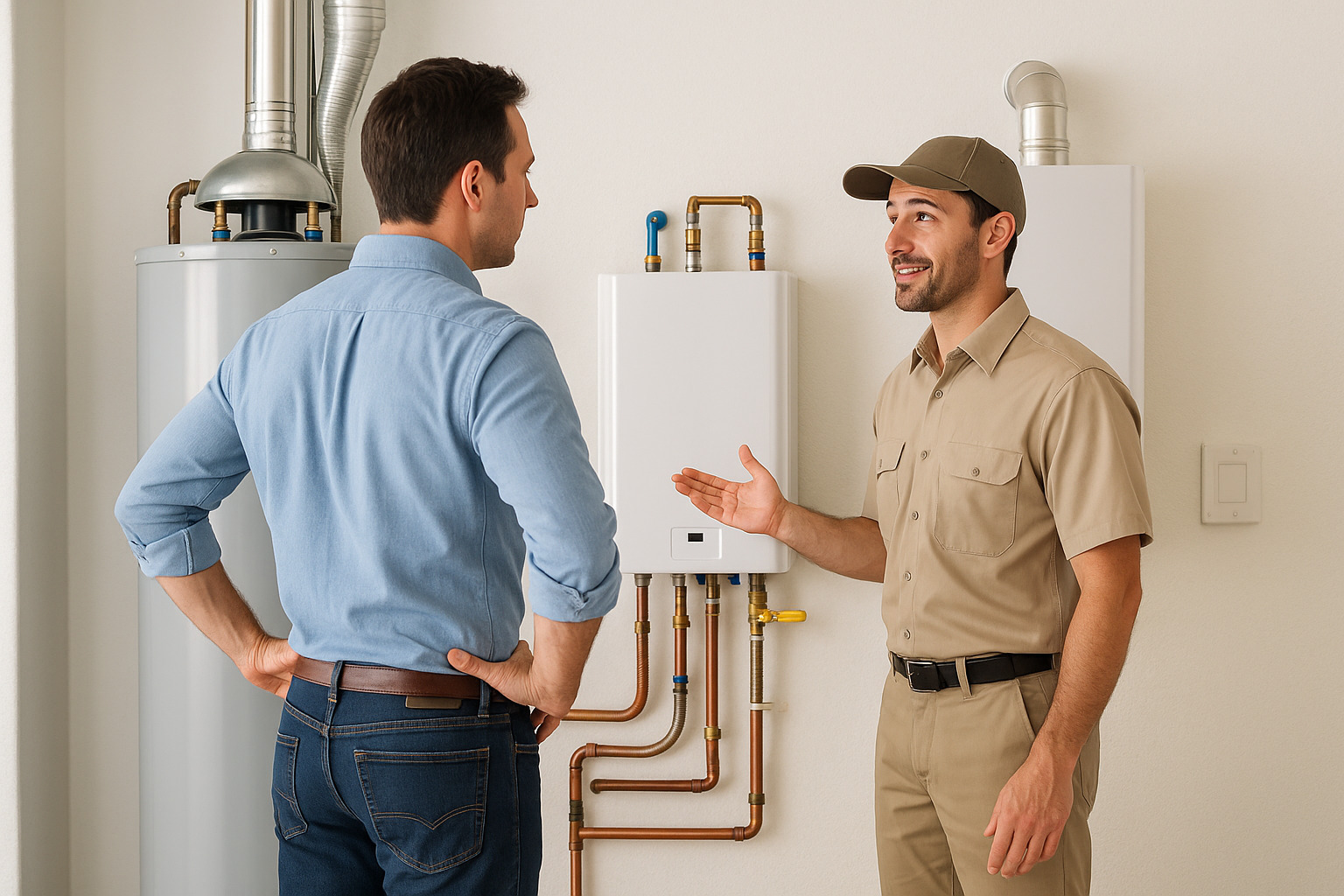
Traditional water heaters store heated water in a tank ranging from 30 to 80 gallons. They are familiar, budget-friendly, and straightforward to install. Most homeowners appreciate the low upfront cost and simplicity of a tank system.
These units are best suited for smaller households or those with steady, moderate hot water usage. Once the tank is depleted, though, you must wait for it to refill and reheat, which may cause interruptions if several people need hot water in a short period.
Tank systems experience “standby heat loss,” meaning they continue to consume energy to keep the stored water warm, even when not in use. This can increase monthly energy bills. On average, traditional water heaters last 10–15 years, and routine water heater maintenance and routine maintenance help most water heaters run at maximum efficiency; most water heaters should be flushed once a year as part of water heater maintenance to remove sediment buildup that can reduce the system’s lifespan, and inspecting the sacrificial anode rod helps protect against corrosion in hard water areas.
In Northern Nevada and Elko, NV, moderately to very hard water often causes sediment accumulation in a hot water tank. That can lead to unusual noises like popping when mineral deposits trap water beneath sediment layers, so addressing these water heater problems early helps prevent costly repairs.
Benefits of Tankless Water Heaters for Energy Efficiency
Tankless water heaters, or on-demand systems, heat water only when you need it, helping provide reliable hot water for daily use. Instead of storing water, they heat it as it passes through the unit, providing consistent hot water for showers, dishwashing, or laundry without running out.
They offer several advantages: tankless models are energy efficient, with higher energy efficiency, lower long-term utility costs and energy costs, compact wall-mounted designs, and a longer lifespan up to 20 years with regular maintenance by reducing energy use and energy waste. They are also a smart choice for homes with limited space. Tankless water heater benefits are ideal for larger families or homes where hot water demand is frequent and spread throughout the day.
Installation of a tankless system is more involved and may require upgrades to gas lines or electrical panels, depending on the model. This makes the initial cost higher, but the long-term savings in energy usage often outweigh the upfront investment. Homeowners may also compare a tankless unit with a gas water heater, electric unit, or hybrid heat option depending on household size, budget, and energy goals.
Proper sizing and expert installation are essential to choosing the ideal system, and regular water heater service helps maintain maximum efficiency and reduce the chance of unexpected breakdowns. Charles Chester Plumbing & Heating ensures that all installations meet local codes and are performed safely and professionally.
Choosing Between Traditional and Tankless Water Heaters
The choice between tank and tankless depends on a few key factors: your home’s hot water usage, space availability, budget, energy priorities, and the age and condition of your current water heater. A traditional tank system may be sufficient for a small family looking for an economical solution. A tankless system is better suited for those seeking energy savings, consistent performance, and a more modern, compact design. Many hot water heaters develop more issues as they age, and most systems last about 8 to 12 years.
Warning signs that should prompt heater repair include no hot water, inconsistent hot water, fluctuating temperatures, unusual noises, and rusty water. Common causes include sediment buildup, a failed heating element, loose connections, or gas or power supply problems. Water pooling or a leaking water heater can point to loose fittings, an anode-rod problem, or a cracked tank, and ignoring it can lead to significant damage.
Our team at Charles Chester Plumbing & Heating offers expert consultation to help you weigh the benefits of each option and select the best fit. We take into account your household size, current infrastructure, and long-term goals before recommending the most cost-effective and new water heater upgrade. If a water heater fails, or the tank is actively leaking or producing rusty water, we may recommend water heater replacement or a new system instead of continued repairs.
Expert Water Heater Advice & Installation in Elko
Whether you’re replacing an aging unit, scheduling water heater repair, or exploring high-efficiency upgrades, Charles Chester Plumbing & Heating is your trusted partner. Our emergency water heater service is important when sudden leaks, complete system breakdowns, or gas-related issues interrupt hot water and risk property damage. We offer 24/7 support for urgent situations.
With over 60 years of service in Elko and surrounding areas, our licensed water heater repair professionals deliver honest advice, transparent pricing, and expert workmanship, and Nevada requires active Nevada State Contractors Board licensing to help protect consumers and ensure compliance with local building codes. Request a written estimate and compare at least three quotes before approving a new water heater installation or repair. Contact us today to schedule a consultation and get a customized estimate tailored to your home’s needs.
Frequently Asked Questions
Question: Is a tankless water heater better than a traditional tank water heater?
Answer: A tankless water heater can be better if you want improved efficiency, a compact design, and steady hot water on demand. A traditional tank water heater may be better if you want a lower upfront cost and a simpler installation for moderate household hot water use.
Question: Why do traditional water heaters run out of hot water?
Answer: Traditional water heaters store a set amount of heated water in a tank, often between 30 and 80 gallons. Once that supply is used, the tank needs time to refill and reheat. This can be noticeable when showers, laundry, and dishwashing happen close together.
Question: What should I check before switching to a tankless water heater?
Answer: Before installing a tankless water heater, your home’s gas line, electrical capacity, venting, available wall space, and hot water demand should be reviewed. Some homes need upgrades before installation, especially if multiple showers or appliances may need hot water at the same time.
Question: Which water heater is more energy efficient?
Answer: Tankless water heaters are usually more energy efficient because they heat water only when it is needed. Traditional tanks keep stored water hot throughout the day, which can waste energy. The best choice still depends on household size, usage habits, and long-term budget goals.
Question: How long do tank and tankless water heaters last?
Answer: Traditional tank water heaters often last about 10 to 15 years with regular maintenance. Tankless systems can last up to 20 years when properly serviced. Flushing sediment, checking components, and keeping up with professional maintenance can help either system work more reliably.
